
Description
ATOMA LINEAR WEIGHERS
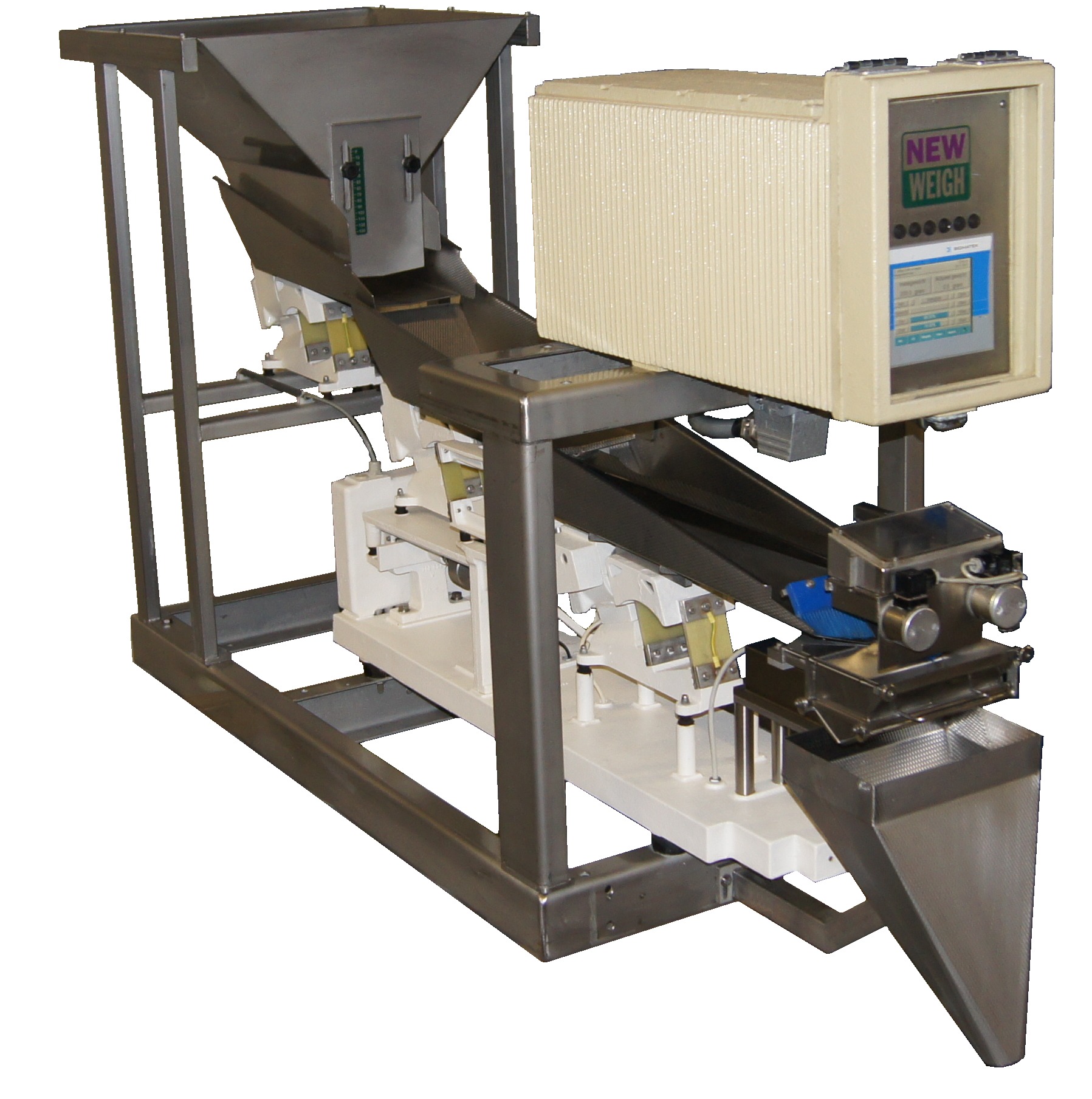
With over 1,000 weighing heads supplied by LWA, the Atoma linear weigher has more than proved its worth in the market. Originally manufactured in Germany, these machines are a prime example of German reliability; the original control system is replaced by our NewWeigh control system, including a new load cell and touchscreen control panel. With our extensive stock of spare parts and machines, the Atoma linear weighers thus guarantee many years of reliable production.
APPLICATIONS OF ATOMA LINEAR WEIGHERS
Atoma linear weighers are used in a very wide range of applications in both the food and non-food industries. Due to the low drop heights in Atoma linear weighers, they are often used for fragile products. In addition, the weigher is frequently used for semi-automatic applications, such as filling pre-formed sachets, jars and trays.
Fresh fruit
Chicken and fish nuggets
Sliced vegetables
Cream puffs
Meatballs
Sausages
Bacon bits
IQF raspberries
Fresh prawns
Fried onions
Cat litter
Coffee
Biscuits
Croutons
Peanuts
Salt
Cereals
Biscuits
ADVANTAGES OF ATOMA LINEAR WEIGHERS
The Atoma linear weighers from Laurijsen WeegAutomaten offer a wide range of benefits:
Very high capacity and accuracy
Often semi-automatic, but can also be synchronised with automatic packers
Short runs
Short changeover time
Automatic taring
Attractively priced
Quick and easy to clean
Short lead times
35 years’ experience
OPERATION AND DESIGN OF THE ATOMA AUTOMATIC WEIGHING SYSTEM
Atoma weighers can consist of 1, 2, 3 or even 4 weighing heads, depending on the required speed. Depending on the product, up to 20 weighings per minute per head can be achieved. There are essentially two types:
The short version with one vibrating chute per weighing head between the hopper and the weighing bin, which is suitable for fine-grained products such as salt, sugar, seeds, coffee beans, etc.
The long version, which consists of 3 wide vibrating chutes and 1 narrow precision-dosing chute. These, in turn, are designed for larger and more difficult-to-handle products, such as sweets, biscuits, meat, fish, vegetables, etc.
Depending on the desired weight, a choice can be made between narrow and wide chutes, with the narrow version suitable for up to 2.5 kilograms and the wide version for up to 10 kilograms.
All contact parts of the Atoma are made of 304 stainless steel and each weighing head has a separate weighing control unit, allowing it to operate as a stand-alone unit. This makes the weigher a true all-rounder in any production environment.
ATOMA CONTROL SYSTEM
Although the original modular Atoma system functions very well, many customers choose to have the weigher retrofitted. The original Atoma load cell is replaced by a digital load cell, and the Atoma circuit boards are also replaced by the calibratable NewWeigh control system. Touch-screen operation, including the ability to save programmes, greatly enhances the ease of use of the weighing machine.
Incidentally, this conversion is also possible for other brands such as Hastamat, Optima and SPK.
Video
Photos
More from Laurijsen Weegautomaten
View all solutions from Laurijsen Weegautomaten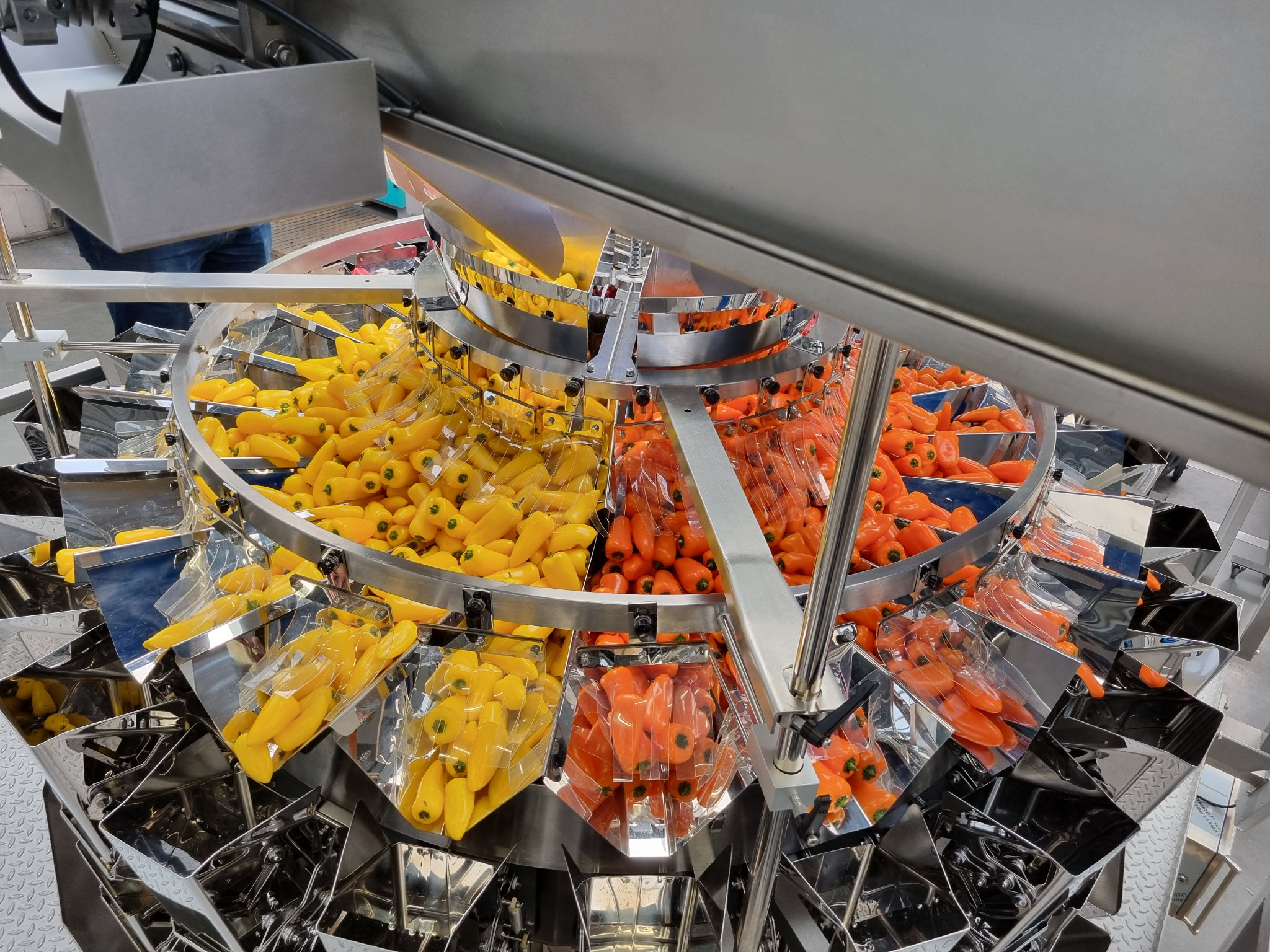 Multihead weighers
Combimat Mixing Weigher
MIXING WEIGHER A precise mix of different types of nuts? Orange, red and yellow mini peppers in a pack? Four different types of coffee biscuits in a box? No problem at all for the Combimat mix weigher! Whenever a mix of different products needs to be produced, we usually see that a pre-mix is made and fed as a single product into a (standard) weigher. However, this can sometimes result in, for example, no yellow peppers ending up in the packet, or there being far too many currants in the nut mix. To guarantee the correct mix ratio, the 20-, 24- and 32-head weighers can be divided into two, three or four segments, each with its own feed and set weight. This ensures that each individual product is weighed to the correct quantity, whilst the Combimat software works in the background to ensure that one segment compensates for any minor deviations in the other segments. This reduces give-away to an absolute minimum.
By: Laurijsen Weegautomaten · Dongen
 Multihead weighers
Fragile Multihead Weigher
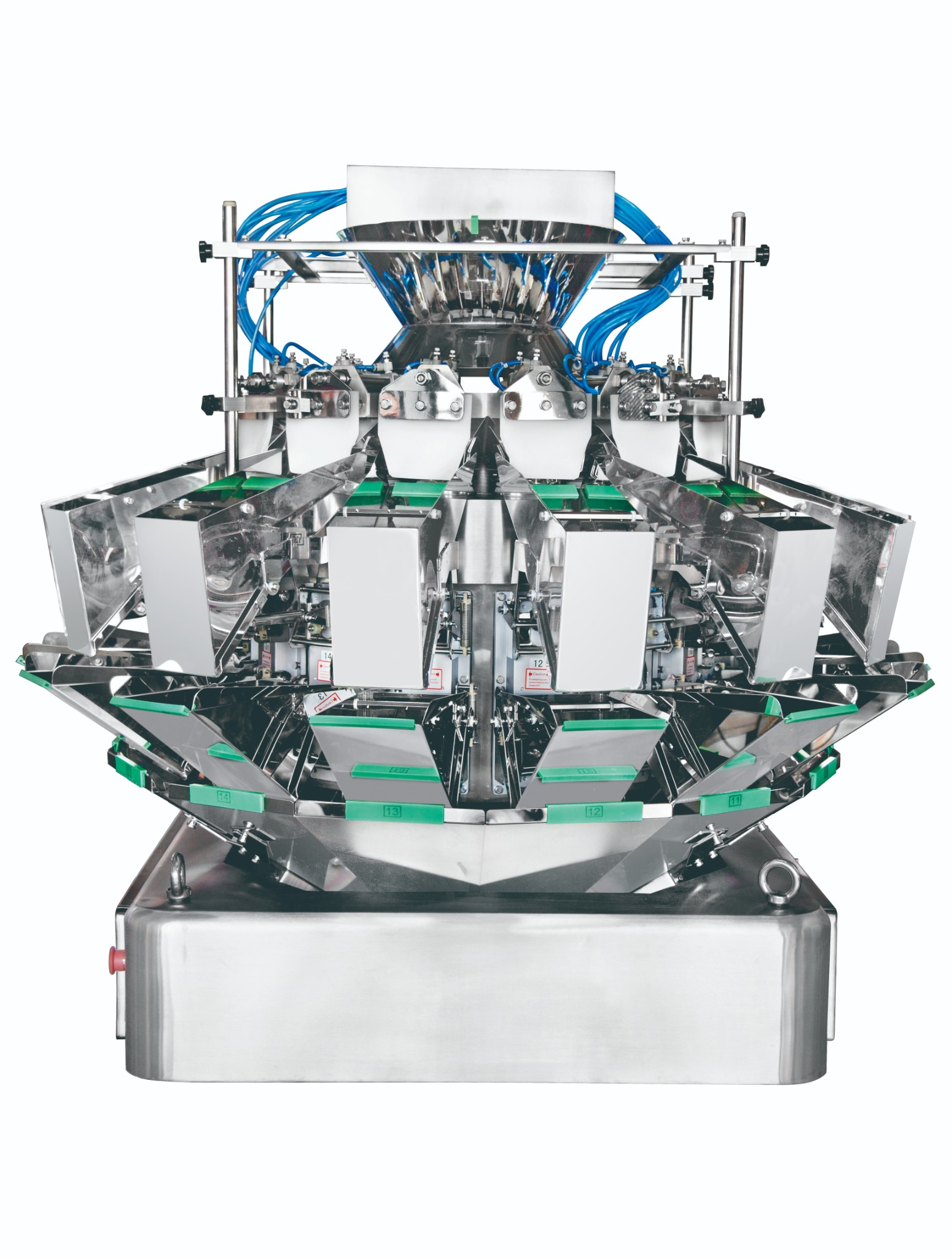
FRAGILE WEGER Fragility combined with speed and accuracy The fragile weigher has been specially developed in response to the need to weigh fragile products such as cakes and biscuits whilst minimising damage. Every multihead weigher involves drop heights, which are not a problem for many products but, in some cases, simply cause too much breakage. In the fragile weigher, all these drop distances have been minimised or replaced by a sliding motion. For example, the feed and weighing hoppers are not positioned vertically one above the other, but are designed in such a way that a sliding motion is created from the vibrating chute. As soon as the feed hopper opens, the product lands in the weighing hopper via a sliding motion. This significantly reduces breakage compared to a conventional multihead weigher. Once the optimal combination of weighing hoppers has been determined, the product is discharged via the slide chutes to the packaging machine. These slide chutes are designed with a very gentle 35° angle, so that little falling velocity is built up, thereby further minimising breakage. Optionally, a skirt or product stopper can also be fitted at the weigher’s outlet to reduce the impact of products colliding with one another. With a maximum speed of 50 (10-head) to 90 (14-head) weighings per minute, there is no compromise on speed or on Combimat’s outstanding accuracy. As standard, it is possible to open the selected weighing hoppers in quick succession. This creates a longer string of product, which falls more easily through the feed hopper of the packaging machine if a narrow bag size has been selected. Furthermore, all contact parts of the machine can be easily dismantled for cleaning, which guarantees maximum uptime of the weigher.
By: Laurijsen Weegautomaten · Dongen
 Multihead weighers
Combimat Multiheads
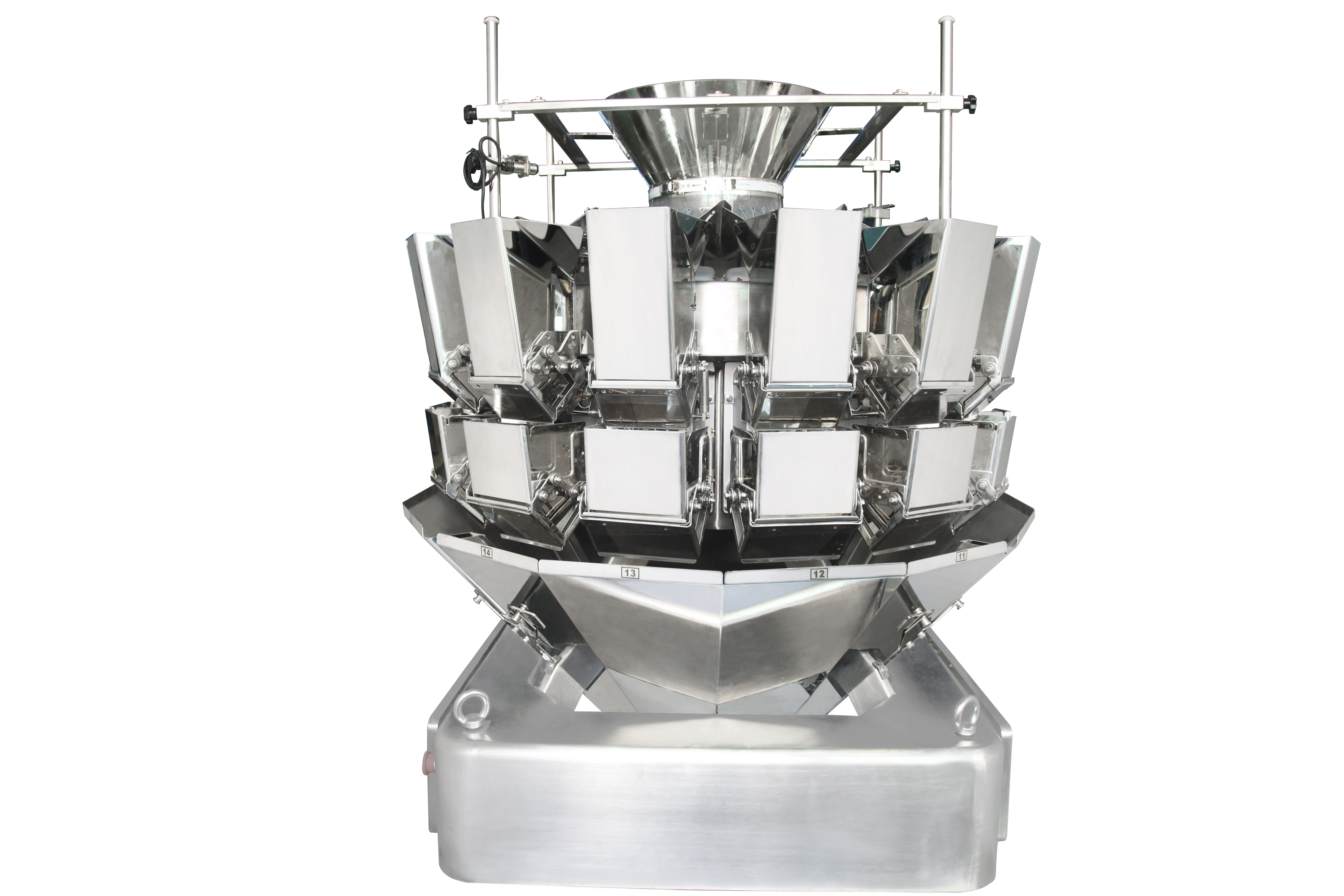
COMBIMAT MULTIHEAD With over 800 machines installed, the Combimat multihead has now more than proven its worth across a wide variety of industries. Cherry tomatoes, nuts, chewing gum, frozen vegetables, olives, sweets, lettuce, as well as bolts, pet food and even play sand and cannabis are processed by these machines on a daily basis. Having started out with standard 8-, 10- and 14-head weighers, the range has since been expanded to include mix weighers and twin outlets, and thanks to the many possible project-specific customisations, the Combimat is often the right choice. Most applications involve the weighing of consumer packaging such as bags, jars, trays and boxes ranging from 1 to 1,000 grams, but the possibilities certainly do not end there. Please feel free to call or email us for tailored advice on your next multihead weigher. MULTIHEAD WEIGHING MACHINE APPLICATIONS The range of applications for the multihead weigher is extremely diverse in both the food and non-food industries: Tea Coffee Rice Seeds Lettuce Biscuits Cereals Pet food Cherry tomatoes Radishes Sweets Snacks Popcorn Croutons IQF chicken fillets Chicken and fish nuggets Nuts Easter eggs ADVANTAGES OF COMBIMAT MULTIHEADS The Combimat weighing machines from Laurijsen WeegAutomaten offer a wide range of benefits: 10.1″ colour touch-screen display in Dutch (also available in German, English and French) Simple operation for setting speed, weighing weight, opening times, etc. Storage for 99 programmes Easy to dismantle and clean without tools Synchronisation with all packaging machines Machine constructed entirely from stainless steel Bins opened by stepper motors; no compressed air required Load cell beneath the top cone for starting and stopping the feed COMBIMAT MULTIHEAD OPERATION In the multihead weigher, the product is transported to the feed hoppers via a central vibrating top cone and vibrating chutes. These discharge into the weighing hoppers, where high-precision load cells determine the weight. Each weighing hopper contains approximately a quarter of the set weight, and the weigher itself calculates the best combination that comes closest to the target weight. These selected hoppers are opened and converge via the central outlet hopper before feeding into the packaging machine. DESIGN AND OPTIONS The Combimat multihead weigher is constructed from stainless steel and is easy to clean, as all trays, troughs and chutes can be dismantled and reassembled without the need for tools. Thanks to the range of weighing tray volumes available (0.5 l, 1.6 l, 2.5 l and 5 l), a suitable solution can be provided for virtually any weight and volume. Many options are available for the Combimat weighers: 6WL and 15dp dimple plate Collection tray beneath the weigher for efficient transfer to the packaging machine Angled chutes for highly sticky products U-shaped chutes for small target weights 60° angle for sticky products (e.g. lettuce)
By: Laurijsen Weegautomaten · Dongen