
Digital Link & the Environmental Omnibus Package (COM(2025) 980)
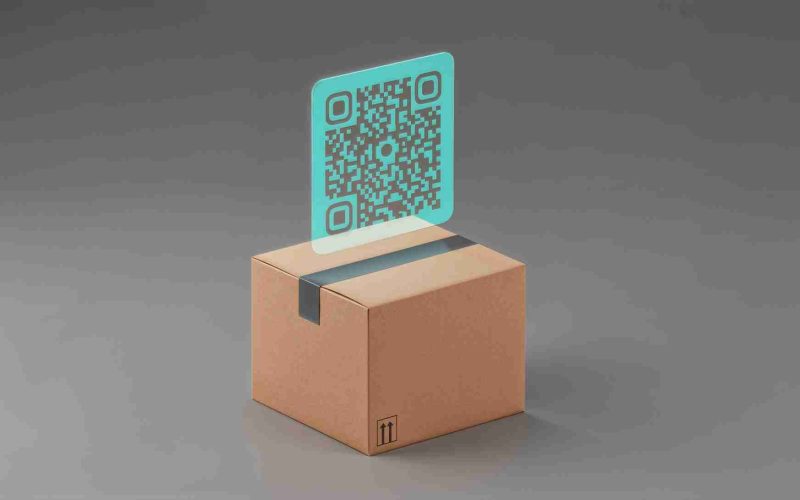
Digital Link and EU legislation are changing packaging. Find out what PPWR and digitalisation mean for manufacturers in the Netherlands and Belgium.
What does this mean for manufacturers in the Netherlands and Belgium?
The European Union is rapidly introducing legislation that is changing the way businesses package, label and communicate. One development stands out: the emergence of GS1 Digital Link (for example, via a QR code) as a practical way of making an increasing amount of mandatory product and packaging information available digitally.
At the same time, the European Commission presented the Environmental Omnibus Package (COM(2025) 980). This package is primarily intended to simplify administrative burdens within environmental legislation and make rules easier to implement. It is not a law that makes barcodes mandatory, but it does align with the broader movement towards digitalisation and more efficient compliance.
In this article, you will learn:
- which EU initiatives together form the new framework for packaging
- exactly what the Environmental Omnibus Package does
- why GS1 Digital Link is becoming increasingly relevant
- what this means in practical terms for manufacturers in the Netherlands and Belgium
The EU initiatives that are changing packaging and product information
Europe is working on sustainability, circularity and transparency through several parallel initiatives. Together, they are bringing about a fundamental change in how product information is provided.
1) PPWR – Packaging & Packaging Waste Regulation
The Packaging & Packaging Waste Regulation (PPWR) replaces the current Packaging Directive. The regulation is in force and will apply across the board from 12 August 2026.
The PPWR focuses, amongst other things, on:
- reducing (unnecessary) packaging
- stricter requirements for recyclability
- reducing empty space in packaging
- clear and standardised consumer and sorting information
- greater need for digitally accessible packaging data
2) ESPR – Ecodesign for Sustainable Products Regulation
The ESPR forms the foundation for sustainable product design in Europe. The Digital Product Passport (DPP) is also being introduced under this regulation.
Key principles:
- transparency regarding material use and product composition
- insight into origin, lifespan and circularity
- phased introduction by product group
3) Green Claims (policy under development)
The European Commission is working on stricter rules to combat greenwashing. Although the exact form is still subject to political debate, the direction is clear: sustainability claims must be verifiable and auditable.
For businesses, this means that unsubstantiated marketing claims are becoming increasingly risky.
4) Digital Product Passport (DPP)
The Digital Product Passport will become the digital identity of products. Depending on the product category, it will contain information for supply chain partners, regulators and consumers.
This includes data such as:
- material and recycled content information
- traceability and origin
- repair and lifespan data
- information on reuse and recycling
What does the Environmental Omnibus Package (COM(2025) 980) do?
The Environmental Omnibus Package is not a new regulation, but a package of measures through which the European Commission aims to make existing environmental legislation simpler, more consistent and less bureaucratic.
The focus is on:
- simplifying reporting obligations
- faster procedures for environmental impact assessments
- improved practicality for businesses
Although the package does not prescribe any specific technology, it does encourage solutions that ensure efficient, digital information exchange.
Why GS1 Digital Link is becoming increasingly important
The amount of mandatory product information is growing, whilst the physical space on packaging remains limited. GS1 Digital Link offers a practical solution to this: a single scannable code that links to up-to-date, online product information.
With a single QR code, for example, you can provide access to:
- sorting and packaging instructions
- material and origin information
- evidence supporting sustainability claims
- product information by country or language
The information can be updated without the need to reprint the packaging.
What does this mean for businesses in the Netherlands and Belgium?
1) QR codes are becoming increasingly common
Retailers, supply chain partners and legislation are moving towards digital product information. QR codes are therefore increasingly becoming the norm.
2) Centralised product data is becoming crucial
The real challenge lies not in the code itself, but in managing reliable, up-to-date product data.
3) Production lines must be prepared
Check that printers and inspection systems are capable of producing consistent QR codes with sufficient readability.
4) Claims must be justifiable
Sustainability claims must be based on data, certifications and demonstrable evidence.
5) A head start for those who start now
Companies that invest in digital product information now will avoid time pressure in the run-up to 2026 and build a future-proof supply chain.
Checklist: are you ready?
- Is your packaging ready for a QR code?
- Is your product and material data available centrally?
- Can you customise information by market or language?
- Are claims substantiated and traceable?
Conclusion
With the introduction of the PPWR, ESPR and the Digital Product Passport, digital product information is becoming a prerequisite. The Environmental Omnibus Package underlines that Europe is committed to smart implementation and reducing administrative burdens.
Manufacturers in the Netherlands and Belgium who are now taking steps towards structured product data and digital access are better prepared for tomorrow’s legislation.
Would you like to know which suppliers can help you with Digital Link, packaging data and compliance? Discover the network of specialists via Nederland Verpakt.
Lees verder
Gerelateerde berichten
2027 price ranges for materials and deposit rates announced
Verpact has published the ranges for material charges and producer contributions within the deposit-refund scheme for 2027. For packaging producers and brand owners, these figures are key to their cost calculations and budget planning. These frameworks stem from the broader European PPWR regulations.
PPWR in practice: Microz on packaging choices for food supplements
The PPWR has been in force in all EU Member States since 12 August 2026. For brands of food supplements, this raises specific questions: about materials, about recyclability and about who the actual manufacturer of the packaging is. Mareno Lubkemann from Microz explains how brand owners, manufacturers and packaging suppliers can work this out together.