
Solutions
Pallet processing & handling: projects and case studies
Project examples within Pallet processing & handling from Dutch and Belgian suppliers. Assess concrete results before posting a tender or getting in touch.
4 projects found.
Subcategories
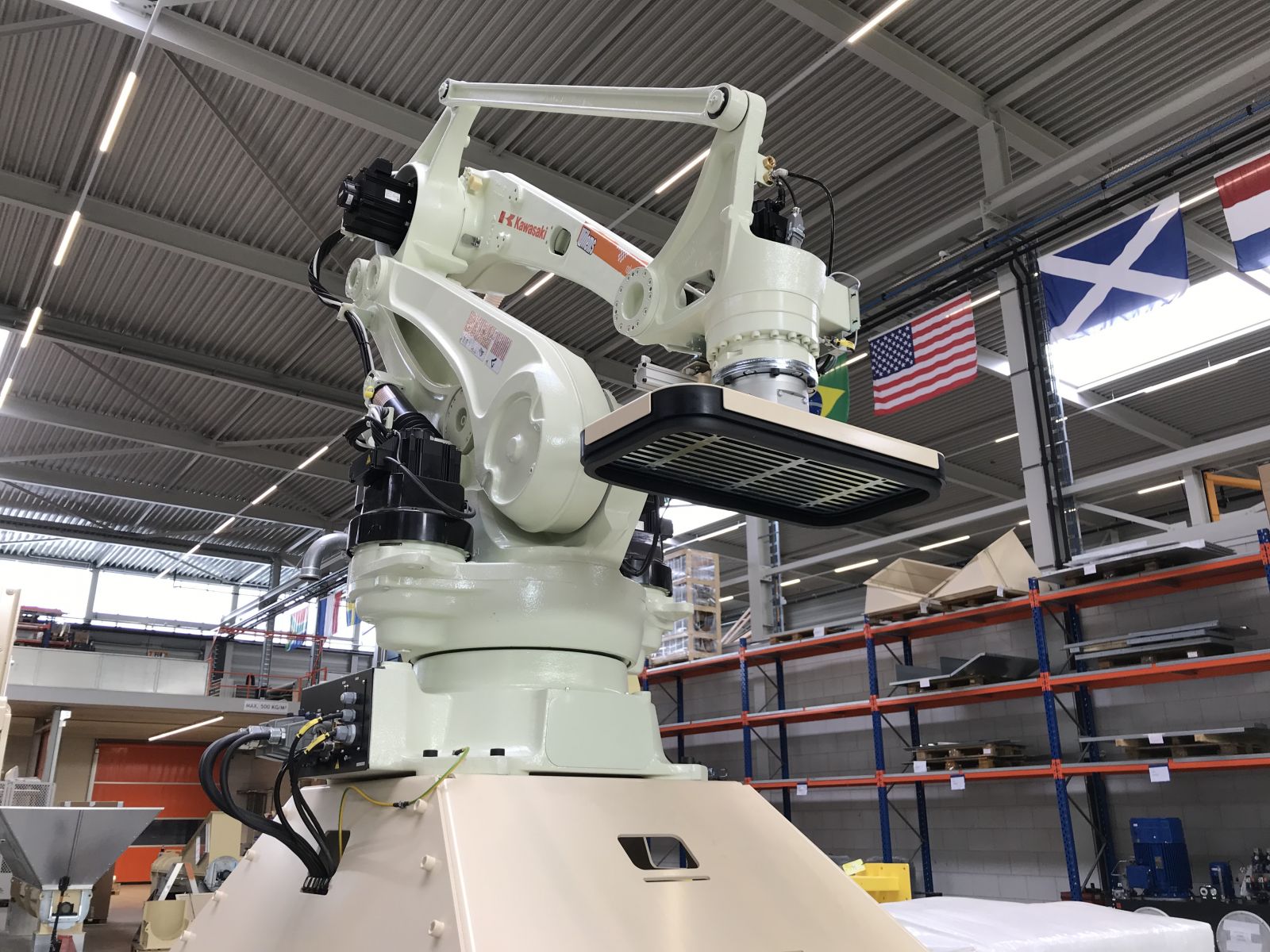
Robot palletiser
Our robotic palletising systems are advanced, automated stacking solutions designed for the safe and controlled palletising of a wide variety of packaging formats. They are used in industrial and commercial production lines where high capacity, flexibility and reliability are required. Product types: bags, bales, boxes, barrels, drums and tins Capacity: up to 1,500 units per hour Adaptability: adjustable to product changes, format changes and changes to the production line Conveyor integration: belt conveyors and roller conveyors for feeding goods to the robot Operation: user-friendly system, suitable for heavy and bulky goods Configuration: available as a turnkey solution, integrable into existing packaging lines The systems are suitable for sectors such as insulation materials, wood processing, agricultural products and recycling. They are suitable for both single palletising cells and dual-robot lines with high throughput. We develop and manufacture the systems ourselves, which enables bespoke solutions for each project. The robots are designed for flexible use with varying products or sizes, without compromising on speed or stacking accuracy.
Willems Baling Equipment · Hapert
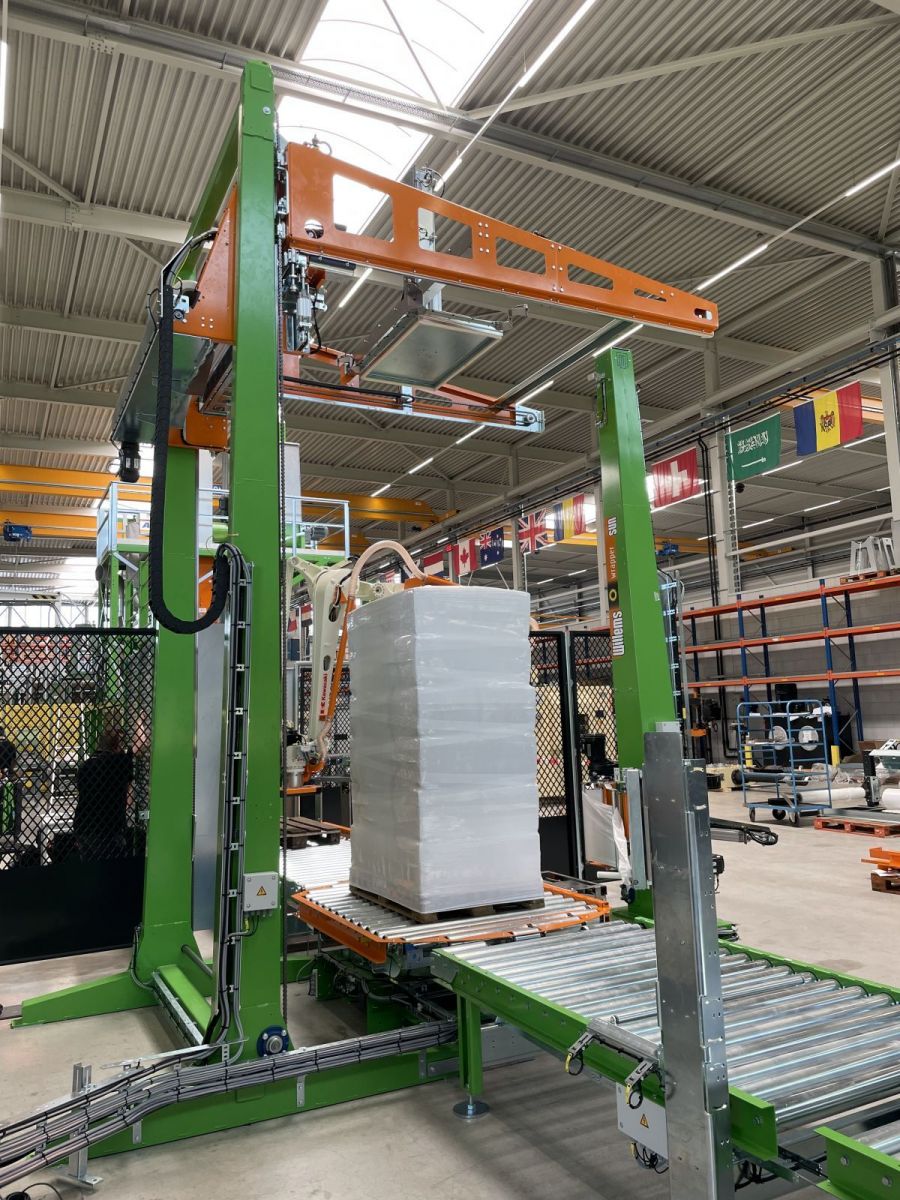
Pallet Stretch Wrapper
Our pallet stretch wrapper is a pallet packaging machine that wraps stacked products in stretch film. The machine protects the load from moisture, dirt and dust and ensures stable pallet packaging that is also suitable for outdoor storage. Compatible pallet sizes: 1,200 × 800 mm (Euro) to 1,600 × 1,200 mm (Industrial) Load height: minimum 500 mm – maximum 3,100 mm (including pallet) Maximum load weight: 2,000 kg Capacity: up to 55 pallets per hour (depending on load and use of top sheet) Conveyor height: 500–600 mm (standard 600 mm) Variable stretch for low film consumption and reduced environmental impact Optional top sheet for extra protection against rain and moisture Integrated sealing bar for sealing the film strand Stack-and-wrap capability: wrapping layer by layer during robotic palletising Modular design with a small footprint; all moving parts are easily accessible The wrapper can be used for a wide range of products and pallet sizes — including mixed loads. Thanks to the stack-and-wrap function, even unstable loads can be effectively secured. The machine is easy to operate and maintain, and integrates seamlessly into an automated packaging line with robotic palletising.
Willems Baling Equipment · Hapert
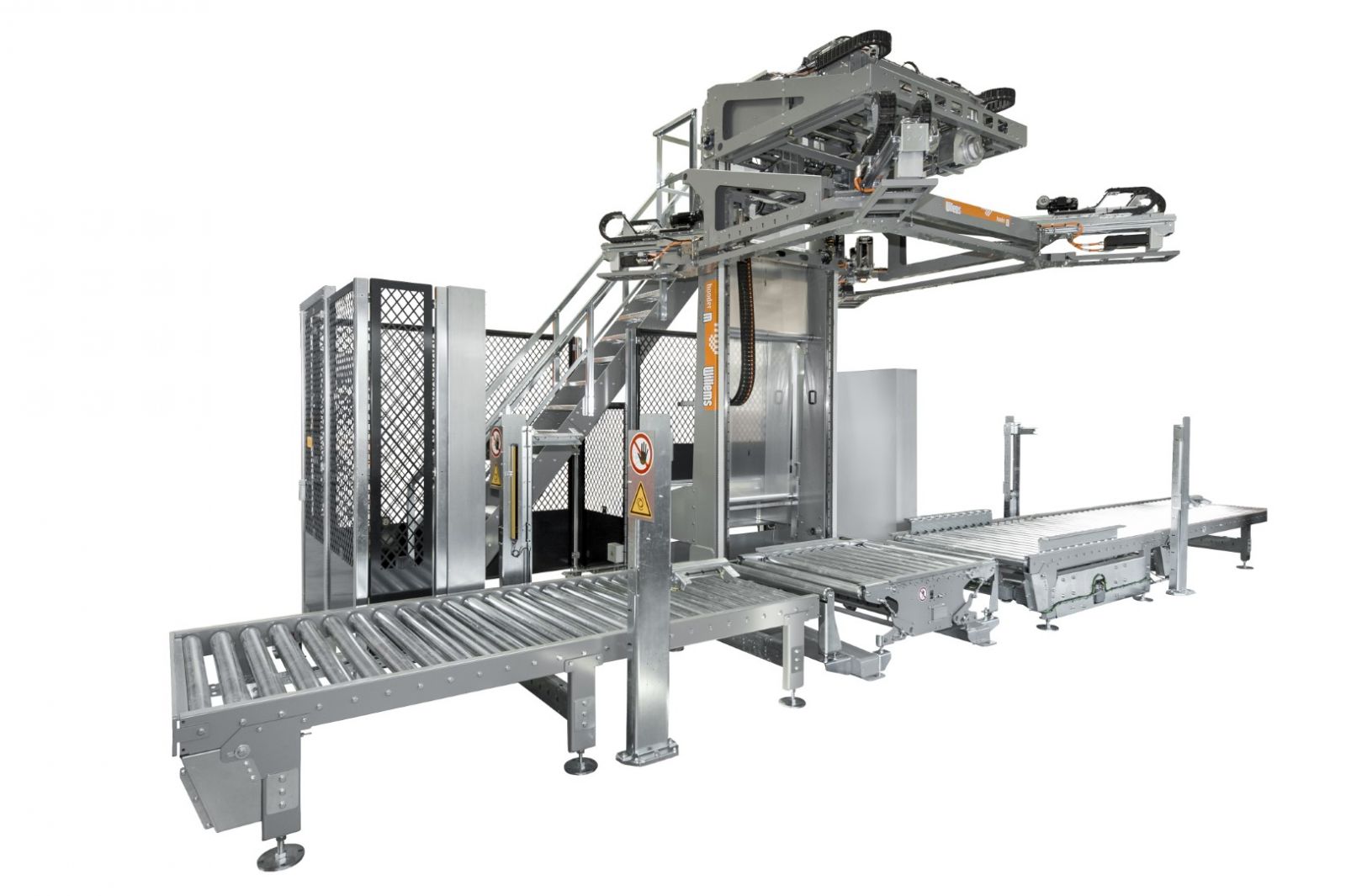
Stretch hooders
Willems Baling Equipment’s stretch hooders are machines that are used to completely cover pallets with a stretch hood (stretch film). Suitable for the watertight, stable and presentable packaging of palletised loads — suitable for a wide range of product applications, including bales, sacks and other stacked goods. Models: Stretch Hooder M and Stretch Hooder L Pallet dimensions (Hooder L): 1,200 × 800 mm (Euro) to 1,600 × 1,200 mm (Industrial) Load height (Hooder L): min. 400 mm – max. 3,500 mm (including pallet) Maximum load dimensions (Hooder L): 1,750 × 1,350 mm Maximum weight: 1,500 kg Capacity: up to 60 pallets per hour (depending on product specifications) Installed power: 14 kW Film roll diameter: max. 1,000 mm Automatic film roll change: multiple rolls can be fitted; automatic change to the desired roll Film pulls under the pallet: secure attachment between pallet and load Horizontal and vertical stretching for a stable load and minimal film consumption Our stretch hooders are well suited for applications where watertight outdoor storage is required, where product labels must remain visible, or where the machine is integrated into an existing robotic palletising line. The machines are suitable for a wide range of sectors, including insulation materials, wood shavings, flax and pellets. All moving parts are easily accessible, which keeps maintenance and inspection simple. The construction is robust with a low overall height, and the hood leaves no loose film ends behind.
Willems Baling Equipment · Hapert

Palletiser – the TFS palletiser makes stacking easier, quicker and safer
The palletising robot is the ideal, easy-to-integrate solution for businesses wishing to automate their palletising operations whilst reducing the workload on staff. Palletiser Easy integration into existing processes Health and safety compliant Automatic tool changes Various stacking patterns Robust stainless steel frame With its advanced technology, the TFS palletiser offers an efficient and reliable way to stack boxes, jerrycans and other products onto pallets The palletiser is specially designed to integrate easily into virtually any production or packaging process. Thanks to its compact size and flexible software, it can be seamlessly integrated into existing production lines. This makes it suitable for both small and large businesses looking to automate their processes without the need for major infrastructure changes. Versatile for a wide range of applications Whether stacking jerrycans, buckets, boxes or bag-in-boxes, the TFS palletiser stacks them in the desired pattern. Thanks to its versatile capabilities and the use of tool changes, the palletiser can be quickly reconfigured to handle a different product. This makes it suitable for a wide range of sectors, such as the food industry, the chemical industry, the drinks industry, logistics, etc. Technical specifications Power supply: 3-phase 400V ~ 50 Hz + N, PE Compressed air: 6 bar Load capacity: 5 kg to 180 kg Robot equipment: Yaskawa Flexible stacking patterns One of the palletiser’s key advantages is its ability to create various stacking patterns. Thanks to its advanced software, the robot can apply different configurations, such as tightly stacked layers, cross-stacking or even specific patterns depending on the product type and the customer’s requirements. This ensures maximum utilisation of the available pallet space, which can lead to lower transport costs and more efficient use of storage space. Versatile for a wide range of applications The TFS palletiser can stack jerrycans, buckets, boxes and bag-in-boxes across various sectors, thanks to quick changeovers with tool changes. Tool changes for versatility The palletising robot is equipped with an advanced tool-change system. This allows tools to be changed at lightning speed to handle different products. For example, the robot can be fitted with grippers for boxes or tins, or suction cups for fragile products. This flexibility makes the robot multifunctional and suitable for businesses that handle a variety of product types. Reduction in physical strain The use of a palletiser eliminates the need for manual stacking of heavy boxes and cans. This will significantly reduce the physical strain on staff. Not only does this result in a lower risk of injuries and absenteeism, but it also increases overall efficiency on the shop floor. The robot can operate continuously without breaks and ensures a consistently high stacking rate. This is beneficial for efficiency and high productivity.
TFS Filling Solutions · Liessel