
WUR research: Food waste has a greater environmental impact than packaging
3 min. leestijd
New insights into the packaging paradox
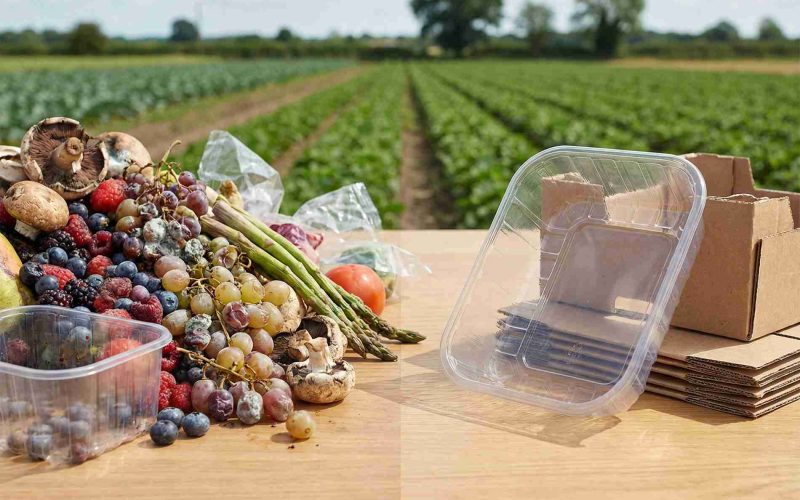
A recent study by Wageningen University & Research (WUR), commissioned by the International Fresh Produce Association (IFPA), sheds new light on the complex relationship between packaging and sustainability. The study, led by expert Toine Timmermans, concludes that the environmental impact of food waste is often considerably greater than that of the packaging itself. This underlines the crucial role of effective packaging in making the food supply chain more sustainable. The analysis focused on ten different product-packaging combinations (PPCs) in the Dutch retail sector, including perishable products such as soft fruit, asparagus, mushrooms and grapes. The results provide the packaging industry with concrete data to add nuance to the debate on packaging reduction and to shift the focus towards minimising the overall environmental impact.Carbon footprint: Packaging versus waste
The key finding is that the carbon footprint of food waste can be as much as five to ten times higher than that of the associated packaging. The study illustrates this with a clear example: a plastic punnet for soft fruit has a CO₂ equivalent of around 20 grams, whilst the fruit itself represents a footprint of 1,300 grams. Throwing away even a small portion of the contents therefore has a much greater negative impact than the production and disposal of the packaging. These figures, based on Life Cycle Assessments (LCAs), show that packaging which effectively prevents product wastage yields a significant net environmental benefit. This applies in particular to products that travel through a long supply chain, such as asparagus imported from Peru. In such cases, the right packaging is essential to prevent spoilage during transport and storage.From less packaging to better packaging
For professionals in the packaging industry, these results offer important insights. The discussion with customers and policymakers can shift from the demand for ‘less packaging’ to a strategic dialogue about ‘optimal packaging’. The focus will be on functionality:- Product protection: The primary function of packaging is to protect the product. This study quantifies the sustainability gains achieved through this.
- Extended shelf life: Innovations in packaging materials and technologies that extend shelf life contribute directly to reducing a product’s overall carbon footprint.
- Data-driven choices: Companies are encouraged to use LCA data to determine which packaging solution has the lowest overall environmental impact, rather than focusing solely on the weight or material of the packaging.
A nuanced future for packaging
Toine Timmermans’ study provides an important starting point for further analysis and a more nuanced public and political debate. The challenge for the packaging industry is not to reduce at any cost, but to innovate and develop solutions that minimise total waste throughout the supply chain. By emphasising the protective function of packaging and underpinning this with facts, the sector can strengthen its position as an essential partner in making the food supply chain more sustainable. Source: GroentenNieuws – https://www.groentennieuws.nl/article/9805711/minder-verspilling-weegt-zwaarder-dan-verpakking/Lees verder
Gerelateerde berichten
Duurzaamheid
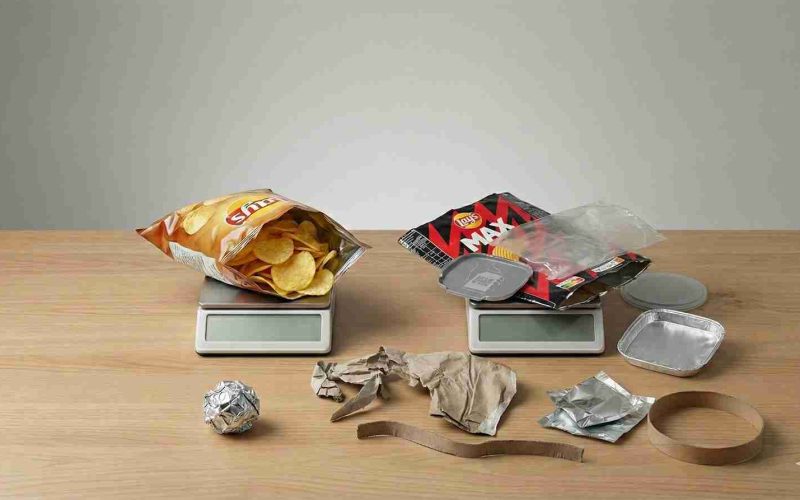
The SnackBox: Sustainable innovation or a clever marketing ploy?
Is the new cardboard SnackBox really better for the environment? An analysis of its weight, materials and price increase (shrinkflation) reveals some striking figures.
Duurzaamheid
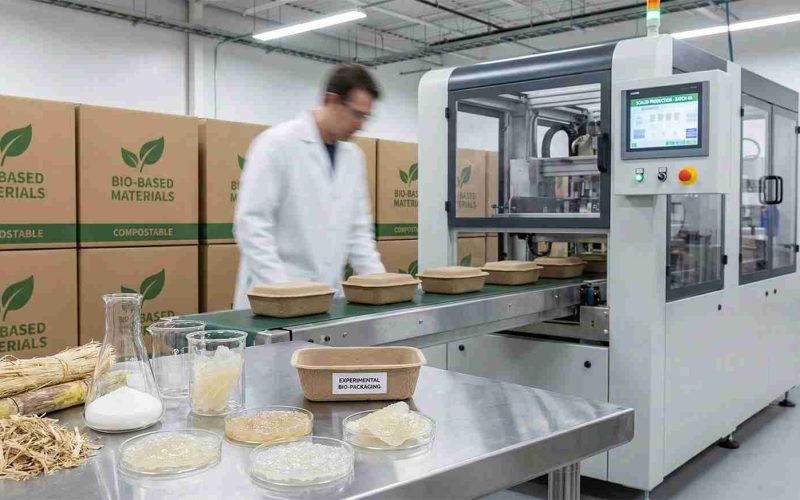
Innovative biomaterials: from experimentation to upscaling
Biomaterials in packaging are making the transition from a niche market to large-scale production. Discover the trends, opportunities and challenges for manufacturers and brands.
Duurzaamheid
Packaging recycling in the Netherlands: sorting plant
In 2024, the Netherlands achieved a record recycling rate of 88% for packaging. Find out what this means for producers, the PPWR legislation and your EPR contribution.